Corpse Flower

Experience the larger-than-life, notoriously stinky corpse flower bloom
June 29, 2026 Update
Scarlet is nearing the end of the life cycle and has begun to wilt, but remains on display at the Conservatory of Flowers until Wednesday. Come and explore all the rest the Conservatory has on display!
What’s the best way to follow Scarlet’s growth?
- Find fresh Corpse Flower updates on Instagram, Facebook, and on our website.
- Visit the Conservatory of Flowers to observe Scarlet’s life cycle.
Conservatory of Flowers Hours
Open Thursday – Tuesday, 10am – 4:30pm
Last entry is 4pm
Members, San Francisco residents, Veterans, and Museums for All participants enjoy free daytime admission with valid ID and proof of benefits. Please reserve a ticket online.
Thank you to our
Corpse Flower Sponsor

Corpse Flower FAQs
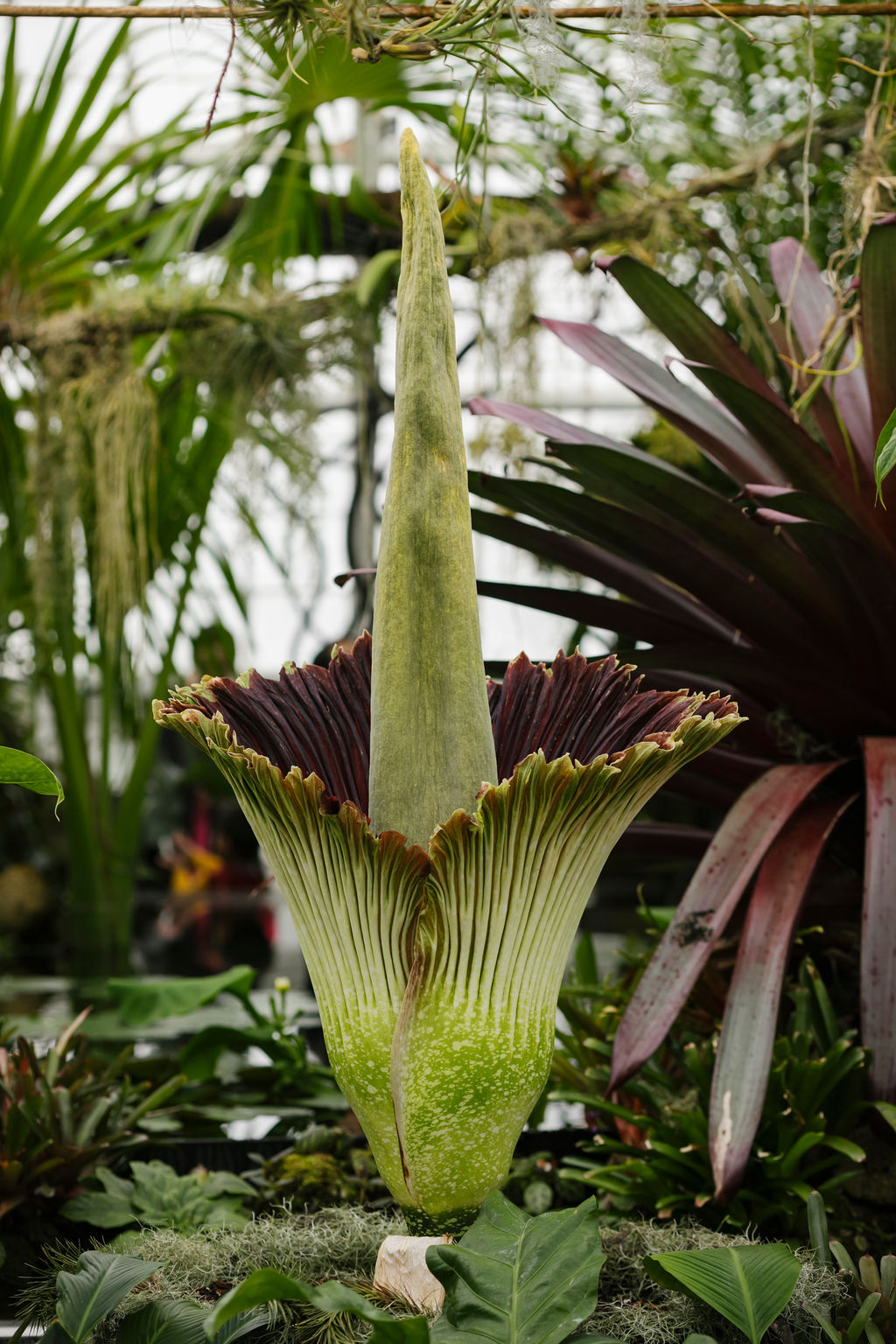
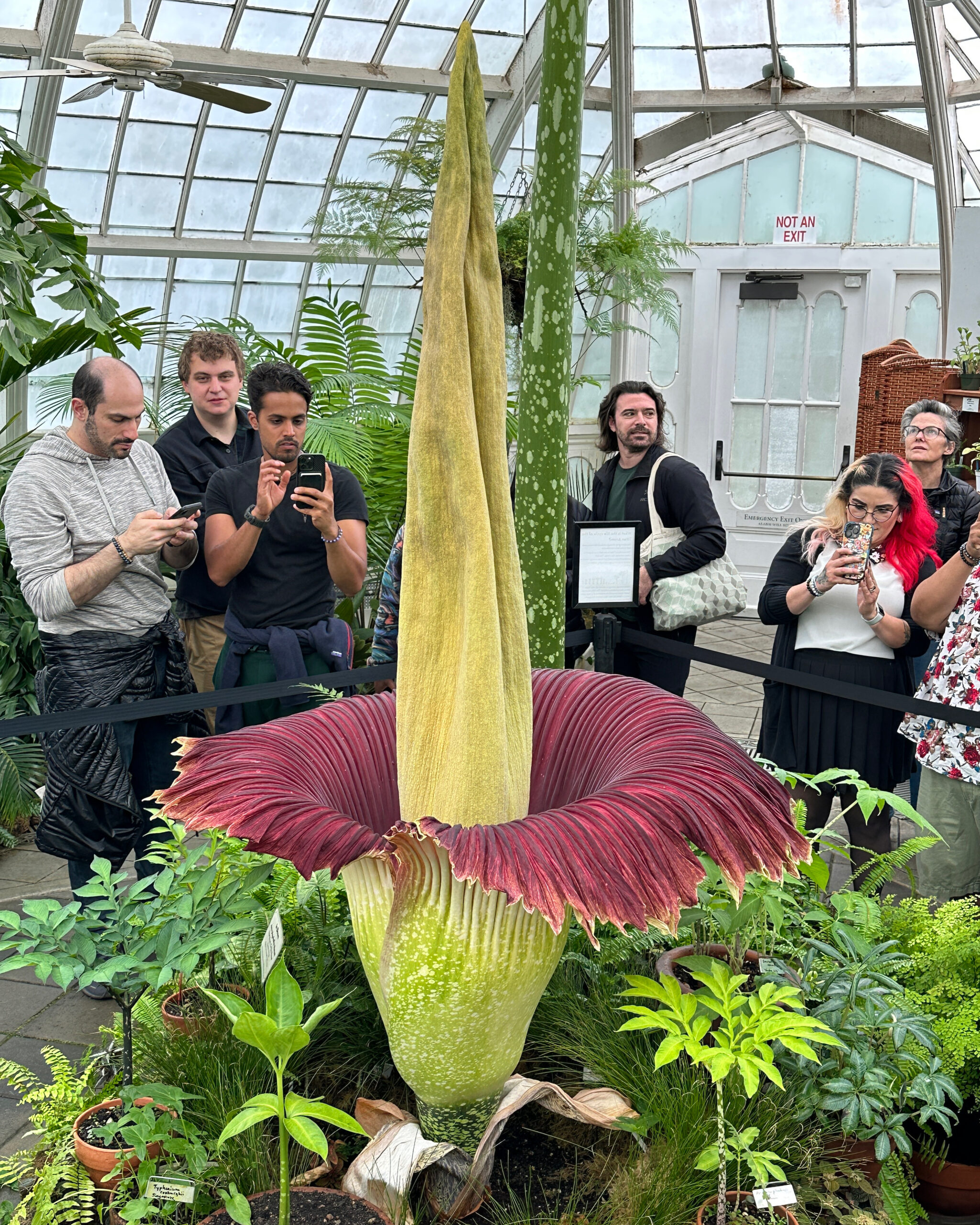
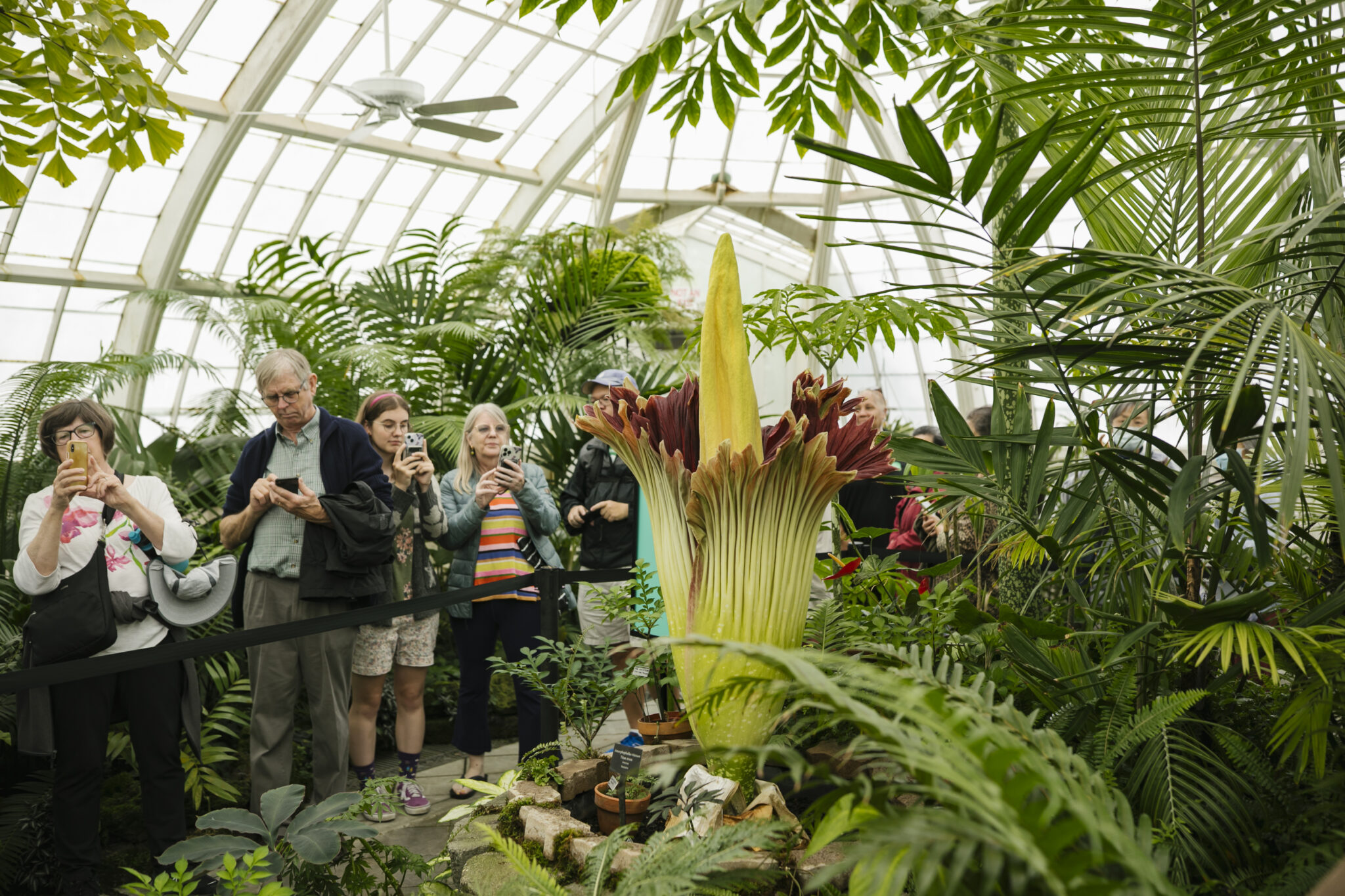
The corpse flower, also known as titan arum (Amorphophallus titanum) is the largest unbranched inflorescence (many tiny flowers acting as one) in the plant kingdom and only blooms once every 3-5 years for just 2 days.
These fleeting blooms can grow up to 10 feet tall and are famous for smelling like rotting flesh! Corpse flowers are native to Sumatra, Indonesia and are listed as Endangered on the IUCN Red List.
Tickets
Visit Scarlet at the Conservatory of Flowers.
Members, San Francisco Residents, Veterans, and Museums for All participants visit for free during daytime hours!
Photo ID proof is required for the following Admissions categories:
- Military/Veterans
- Museums for All
- American Horticultural Society (AHS) Reciprocal Garden Member
- San Francisco Residents
- Current ID or Driver License showing San Francisco address OR
- Current utility bill or lease/rental agreement showing name and San Francisco address with valid photo ID
Not yet a member? Join or renew today!
Smelling “bad” is relative. Corpse flowers may smell unpleasant to some humans, but the scent is highly attractive to carrion beetles and flies!
The corpse flower’s infamous scent, often compared to rotting meat, is a deception device that tricks carrion beetles and flies into visiting and pollinating flowers!
These insects lay eggs on decaying animals so their larvae can feast when they hatch. They are attracted to the scent of decomposition, and the corpse flower smells just like it.
The corpse flower bloom also heats up on the first evening of the bloom to further disperse the odor!
The Corpse Flower, also known as titan arum (Amorphophallus titanum) has the largest unbranched inflorescence (many small flowers working as one) in the world, which can be up to 10 feet tall!
The largest flower in the world is Rafflesia arnoldii, which produces a bloom that measures 3 feet (1 meter) across.
The Corpse Flower, also known as titan arum (Amorphophallus titanum) is endemic to the Indonesian island of Sumatra. It grows on the steep hillsides in tropical rainforests.
Its Indonesian name is “bunga bangkai” which translates to “corpse flower” in English.
Yes, the titan arum is listed as Endangered on the IUCN Red List, with less than 1,000 individuals remaining in its native habitat. Its population is currently declining due to habitat loss.
A major cause of deforestation in Indonesia is expansion of oil palm plantations. Palm oil is an ingredient in many candy bars, cookies, shampoos, and cosmetic products.
We can help by pressuring manufacturers to use sustainably produced pam oil, and conserving critical forest area.
Indonesia’s rainforests are believed to be home to 10% of the whole world’s plant species, and is also home to critically endangered species including the Sumatran Tiger, Javan Rhinoceros, and Sumatran Orangutan.
The plant goes through years of dormancy and leaf cycles between blooms.
The enormous titan arum leaf is so large it is often mistaken for a tree! The leaf photosynthesizes and produces energy, which is stored in an underground corm, similar to a potato.
Once enough energy is stored up, the titan arum may produce a bloom. The inflorescence takes about a month to mature and is only open and pungent for two days before the spadix (pointy cone-shaped structure in the middle) withers and collapses.
After typically blooming for the first time at 7-10 years of age, a titan arum can bloom again every 3-5 years.
Strollers are not allowed inside the Conservatory of Flowers and may be parked outside the Conservatory on the grass.
Sign up for our newsletter
Be the first to know about events, classes and special experiences at the Gardens.